Modern airplanes travel the world through all kinds of weather via the use of radar. Oxford Dictionary defines radar “as a system for detecting the presence, direction, distance and speed of an object. Radar is used to indicate there is something that has not yet come to the attention of a person or a group”. We have all heard the expression about “being off the radar”, meaning something is out of sight and mind.
Radar radar focuses on what lies ahead. Radar technology is designed to alert all stakeholders to potential risk so that changes can be made to eliminate, or at least, minimize the impact of the risk. What is meant by all stakeholders here? Clearly the pilot and the co-pilot of the plane are primary users of the radar equipment on the plane. But what about the crew, the passengers, and the families of all involved? They are also key stakeholders of an effective radar system.
Ships and other sea-going vessels use sonar. Sonar provides visibility to what lies beneath. The infamous Titanic set sail on its maiden voyage on April 10, 1912. Four days later on April 14th, the ship collides with a submerged iceberg and sinks in less than three hours. The captain and his crew were aware there was the potential for icebergs but had no knowledge of the scope of the danger that lurked beneath the sea. This lack of awareness led the unfortunate deaths and tragedy associated with the Titanic. Computerworld published an article by Sharon Gaudin stating “if the Titanic had been equipped with sonar and radar technology, the tragedy would likely not have occurred. However, sonar was still in the experimental stage in 1912, and the development of radar was still more than 20 years in the future”.
So what do radar, and sonar have to do with detecting hidden data risks? Radar provides the ability to see what lies ahead in the sky or land. Sonar reveals what lies beneath the surface. Radar and sonar about both types of detection systems. Their task is to continually monitor the surroundings. Both radar and sonar are both types of risk management system.
Today’s corporations are literally oceans of data. The sheer amount of data is increasing at increasing rates. But what lies beneath in this data? What data issues are undetected? What data issue is about to manifest in a very cost business decision or result in the company getting an audit finding, or even worse, a material weakness potentially impacting their profitability and finances.
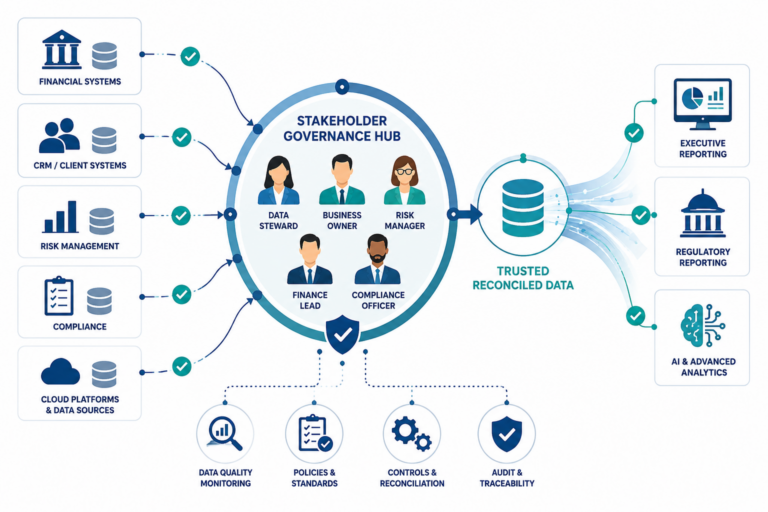
We were on a call yesterday with a client who is a large wholesale mortgage lender. The purpose of the call was to explain a new data control that showed a variance in the data. The problem was that an external data provider had a data problem that they were not able to fix, resulting in duplicate transactions. The duplicates caused primary key violations for the client’s data warehouse that required manual intervention. To resolve the symptom, we “coded around” the duplicate record so the warehouse would load. So day after day the feed from the external provider is processed and the duplicate record is bypassed. All seemed OK, but there was the ever-present risk that bypassing a record impacted a customer balance. All sight unseen. This control, leveraging the InfoCheck engine, was simply an alert that incoming data had been skipped. It is a common practice to code around known data problems. It is less common to put leverage a risk management tool to continually monitor the skipped record and send an alert. For the Titanic, sonar was looking for masses under the water. For this client, the control engine was looking for patterns in the data that represented potential issues, or risk, the quality and integrity of data. In Data Governance speak, the stakeholders here were the data owners, data stewards, and the often overlooked data consumers both internal and external to the organization.
There is an emerging focus on data risk management. There has always been emphasis on the different types of organizational risk. Organizations have strict policies and procedures to mitigate operational risk, regulatory risk, credit risk, etc. Complex derivatives are used to hedge against currency and interest rate risk. But what about the risk that lies hidden in the data? The best analysis in the world is only good as the underlying data. Financial disclosures are certified with fingers crossed the data used in the reports is valid. Unknows in the data are a very significant risk, and this risk is increasing exponentially along with the volume of data.
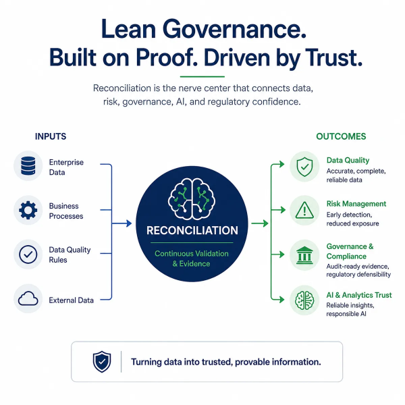
Following the lead of the systems of radar and sonar, MetaGovernance has turned our interest and passion for data risk management into technology-enabled solutions that provide clear visibility to hidden data risks, awareness of the registered governance stakeholders, and predicable actions needed when data risks are detected. As organizations continue to navigate to the future, it is critical to provide operational system analogous to radar and sonar to discover the hidden data risks before expensive mistakes are made that could have easily been avoided given the needed awareness.